Showing posts with label journalism. Show all posts

Friday, 15 April 2011

Letting everyone eat cake

I watched this video on the Private Eye website, and nearly screamed. Going into a sweet shop is as far removed from the democratic system as you can get, because voting is not about you, as an individual, getting a favourite chocolate bar to eat all by yourself. The only system which allows that is a dictatorship, if you're lucky enough to be the dictator.

Democracy is more like trying to settle on a set menu for a large group, to make sure that most people get a lot of what they like or what is good for them, and nobody has to go hungry. I tried to think through if AV is a better way of doing this, and realised that it's not really the system of voting that's the problem:

Wednesday, 2 February 2011

Feed the troll (to the goats)

In case you've been away from the internet for a while, this happened:
  • Melanie Phillips (never a good name to have in the first twenty words of a post) wrote an article claiming that children were to be "bombarded with homosexual references" in lessons on all kinds of subjects. Tabloid Watch has a good run-down on how the story evolved to that hysterical point.
  • Partly due to her use of the term "normal sexual behaviour", partly because of her clear disregard for the very serious and widespread issue of homophobic bullying in schools, and - I guess - largely because she so frequently writes 'kick me' on her own back, lots of people got very angry about what she wrote.
  • Johann Hari wrote a very good, detailed explanation of how the 'gay agenda' extends no further than trying to reduce discrimination and bullying, and how no amount of references (or avoidance of references) to the existence of homosexuality will change the sexuality of children.
  • Melanie Phillips wrote a follow-up article about how the reaction to her piece proves her point - gays and their liberal supporters want to smother free speech, Johann Hari has missed the point of her article (he really, really hadn't) and, hold the front page, threats against her person had been transmitted via email and Twitter.
What reassures me about this whole kerfuffle is that even though such an outdated, divisive and inaccurate piece was printed in a national newspaper, so many people had a problem with it. This is very definitely progress from a few decades ago. What is less reassuring is the form that this outrage has apparently taken. Even discounting the alleged death threats, most of it wasn't at all productive. On the day the article was printed, my Twitter feed was full of people informing the world, with differing levels of eloquence, wit and strong language, that Melanie Phillips is homophobic, and a bad person. This I knew.

What I didn't learn until I read her article and went looking for the Schools Out website, was what exactly it was that she had portrayed as an "abuse of childhood". It looks like an excellent project. It also looks like it would benefit from some positive public attention, and the cooperation of more teachers and politicians. It would have been nice if, instead of stringing swear-words together and venting against one person's homophobia (which is unlikely to change, no matter how many people offer to beat it out of her) more people had publicised what it is that Schools Out is doing, and why Phillips' representation of this was false.

So here's the project. They have a donate button. If we use it as a Mad Mel-Induced Swear Box, it might bring something positive out of a needlessly negative couple of weeks.

Friday, 25 June 2010

Speech? Criticism? Er... oh look, a butterfly!

I've just read this post over at Tabloid Watch and was nearly moved to tears. This week Jamie Reed, MP for Copeland, Cumbria, made a speech in Parliament slamming the national media for its coverage of the recent shootings, with particular anger reserved for the journalists who personally turned up to trample on the grieving process of the families and wider community. The extracts picked out by Tabloid Watch form a very moving picture of the pain caused by such intrusions in the name of profit, as the bereaved and their neighbours and friends are hounded for stories, photographs and gossip by people who frankly don't give two shits about them, beyond their potential use to generate money.

We can all agree that such strategies are despicable - they quite obviously cause a great deal of unnecessary distress to those targeted. I'm sure most readers, given the choice, would rather forgo such snippets of information if they knew just what was done to obtain them. Yes, the news from Cumbria was interesting, but most people's tea-breaks would have been just as diverting if the space had been filled by some amusing PR piece about a pig in wellies. No less revenue would have been generated if all papers had told their staff to back off.

And yet, nothing is going to change. Reed's point has been made time and time again whenever there is a major tragic event. Hands are wrung, vague promises of more comprehensive voluntary ethical codes are made, only for the exact same thing to happen next time. So what's to be done?

First of all, the issue needs to be made public. So far, no national news outlet seems to have bothered reporting on Reed's speech. This is an elected representative, calling for a genuine improvement, in the institution dedicated to making such changes (not at a press-conference, media schmooze event, wire-tapped conversation to a colleague or any other of the less appropriate times when the media bother to actually listen to MPs). He is genuinely speaking on behalf of his constituents and he and they deserve to be heard.

So then, fellow dwellers of the blogosphere: pass it on.

Saturday, 2 May 2009

Guess the paper

Now here's a surprise:


  • It's a story about public funds being wasted.
  • It contains a quote from the Taxpayers' Alliance.
  • It suggests that the findings are just common sense.
  • It's linked to from the front page under the sarcastic heading: Science advances - ducks 'like water'
  • There's no evidence that the words 'like water' appeared in the original research.
  • An amusing picture of a duckling takes up rather a lot of space.
  • You have to wait until the end of the article to find out the real, useful point of the research.
  • In no way can the title be considered an accurate summary of these scientific findings.

So in which tabloid can this shrieking piece of anti-public-funded-science fluff be found?

The Guardian


On the other hand, at least they're not warning working mums that their house-husbands might be cheating on them.

Wednesday, 1 April 2009

The original's always the best.

First of all, I've put another book up on Tatty Jackets.

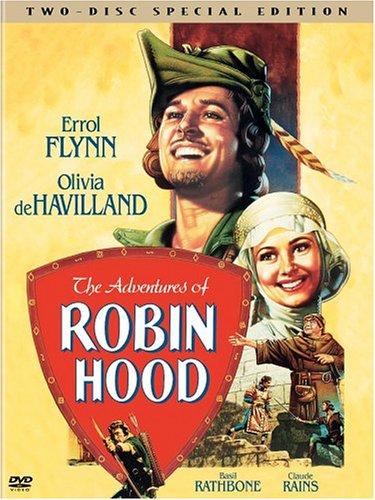
Secondly, I'm a bit bemused by the controversy - if there is indeed a fire lurking behind the Daily Mail's industrial smoke machine - surrounding the BBC's Robin Hood series. I seem to remember some previous grumblings about them making it all dumbed down and relevant (as if making a program no-one's interested in would be a better use of the license fee) but it's the introduction of a martial arts expert that's caused the latest kerfuffle. Hang about, that should read "black martial arts expert".

Now, I can sometimes be a stickler for historical accuracy, but it only has steam coming out of my ears when it's a rubbish, misleading reenactment in what's supposed to be a serious documentary. This is fiction. It's a fictional series loosely based around a character who has appeared in lots of other fiction. Absolutely none of his appearances can be considered more 'accurate' than the others.

Maybe some people would disagree and claim that you can trace a likely candidate for the 'real' Robin Hood, find his mortal remains, discover his height and build, run DNA tests, reconstruct his face, pin down exactly what years he was alive and dress him only in the fashion of the time, in the materials that would have been available. Above all, make sure he speaks only medieval English, in his local dialect. Oh, and perfect teeth are not an option.

Does this sound like any Robin Hood you've ever seen? A quick image search reveals variety of hair colours and facial hair arrangements, shoes ranging from hobnailed and durable, to ridiculously pointy:


There's been a futuristic Robin Hood, a vain, idiotic Robin Hood whose band was led by Maid Marion (also on the BBC) and I don't think that was considered a problem. Nor do I recall howls of protest when Disney "reinvented" Friar Tuck as a bear.

This process of making stories more relevant to the audience is not a feature of modern political correctness or dumbing down. It's been carried out in various art forms for centuries. Artists have always sought to present characters in a new light, to make their audience think and see new aspects of the stories or morals they portray. That's the whole damn point of art - that's what separates fiction from fact. Do an image search for Helen of Troy or the Virgin Mary (ignoring any result involving toast) and you'll see how their clothes and hairstyles and stance were altered as tastes changed. Those medieval manuscripts that every European country is so proud of - most of those are rehashed old tales, chopping and splicing stories from different centuries and different areas, changing names, adding or removing characters. Digressing from these 'original' stories isn't some kind of travesty or a betrayal of our heritage. It's merely continuing an artistic process that those manuscripts were one small part of.

I only read through a few of the readers' comments before deciding that life is too short for that kind of thing but I still found one worth getting very, very angry about.


Well what a surprise, the BBC does it again. They won't be happy until they have completely removed all traces of native English culture from our land by brainwashing the public, gradually introducing anti English and dare I say it anti White propaganda; and by the way, its not racist to highlight the concerns of white people who want to hold on to their own culture!

Why is it suddenly racist to say I'm proud to be White? It's not racist to openly say I'm proud to be Black!

Why is it racist to say I love my country and my culture? It's not racist for a Black person to say I'm proud my homeland and my culture!

Having other races and faiths in the UK is fine, but don't tell me I'm racist for being proud of who I am!

These issues are a concern when we have the BBC trying to rewrite history in an attempt to put other cultures first!
Click to rate Rating 234

- John, Birmingham, England, 28/3/2009 14:52

Now, David Harewood was born in Birmingham. He has British citizenship, and no other. The legends of Robin Hood are as much a part of his cultural heritage as of any other Brit. We could of course decide that only actors who can prove that all of their ancestors since the reign of King John were born on English soil are worthy enough to play these characters. On the other hand, that would result in Robin Hood disappearing from our screens altogether. Then we'd have a real example of 'native English culture' being lost.


As always, my heartfelt thanks go to MacGuffin and all other bloggers who trawl their way through the tabloids so the rest of us don't have to.

Thursday, 22 January 2009

Once you start looking you can find it everywhere

This was going be a short post about one stupid thing but has ended up covering four very different kinds of stupid. I've attempted to rein in my criticism as far as possible, firstly because it's more fun if people find the stupid for themselves, and secondly because if I analyse these masterpieces of mindfartery for much longer the bile is going to reach and kill my brain.


  1. PETA's "Sea-kittens" campaign - As I wrote a post on this last year, I was delighted to see this topic hit the Guardian and - far more importantly - Unspeak. Ingrid Newkirk's defence of the campaign is less than convincing:
    And while "sea kitten hunting," formerly known as angling, is cruel to animals, commercial sea kitten hunting is environmentally catastrophic. It has devastated the ocean's ecosystem to the extent that large fish populations are only 10% what they were in the 1950s. Scientists warn that the damage caused by the fishing industry is irreparable.
    [...]
    We invite everyone of any age to play the sea kitten game and find out more about Peta's Sea Kittens campaign. It's a bit of fun with a serious message: never dismiss any individual's interests just because they look a bit funny.
    I completely agree that overfishing is a huge environmental problem which needs to be prevented as it cannot be cured later. What I don't get is why "everyone of any age" should be invited to wade through a flood of drivel before they can find out important facts about the situation. And how is that "serious message" in any way linked to the campaign? My mental faculties clearly aren't up to scratch, maybe I should start eating fish.

  2. Elizabeth Wurtzel's explanation of how all criticism of Israel is anti-semitic - One reason I love the Guardian's Comment is Free section is that people are given space to explain opinions that you may have suspected were only straw-man positions. I've come across many things refuting this idea but never met anyone who supported it. Wurtzel's article is similar to Newkirk's defence of PETA, in that it only serves to inspire fresh counter-arguments. I have one thing that I'd like to add to the existing criticism of this article, specifically countering this assertion:
    [...]while I'd like to artificially separate anti-Zionism from antisemitism, like most American Jews, I'm not willing to make that false distinction: when there is more than one Jewish state, the world's hatred of Israel might become no different from its exasperation with any other country, but since Israel is the only homeland, and really it is nothing more than six million Jews living together in an area the size of New Jersey, I can't pretend that the problem with Israel is that it's a poorly located country that happens to be at odds with its neighbours and only coincidentally happens to be Jewish. The trouble with Israel is the trouble with Jews.

    In fact it's easier to make a distinction between "the Jews" and Israel than it is to separate a country from its citizens. Whether you're talking about Judaism or "Jewishness", you're discussing a worldwide community of millions of people, with vastly different backgrounds and opinions, with members who have inspired profound respect in many different fields. Israel is just one political / geographical entity. It's really very difficult to confuse the two, unlike discussions about "Iran" and "the Iranians", for example.

  3. "Six months after the MMR jab... a bubbly little girl now struggles to speak, walk and feed herself" - If there's one word I'd like to ban from Daily Mail headlines, it's "after". This article made me very angry indeed, being the shameless exploitation of a parent's fear and misery in order to shamelessly exploit other parents just to sell cheap paper to wrap potato peelings in. Every damn line is either persuading parents to mistrust vaccinations or manipulating their emotions to make the persuasion all the more effective. It's such a dangerous campaign to run, with absolutely no reason for it, but once tabloids get up on a high horse they'll happily trample anyone into the mud. It seems impossible to me that a literate individual could write the following sentences and not grasp the reality of the situation:

    [Doctors] have told Melody's mother Alicia Ellis, 25, there is no reason to believe the MMR vaccine has anything to do with her condition.
    However, Miss Ellis is convinced it is the only logical explanation and there could be a connection to a neurological problem she had as a newborn baby.
    Miss Ellis, from Leeds, said: 'Show me the evidence that it's not linked to the MMR jab and I might be all right, but they can't.
    [...]
    The tiny baby was seriously-ill in hospital and was close to death. Doctors feared she would suffer from developmental problems as a result, but to their amazement she made a complete recovery and grew up as a normal, healthy little girl.
    [...]
    'I think the jab has attacked the part of her brain that was damaged when she was a baby. It's just too much of a coincidence for this to happen just two days after her jab, but no-one wants to listen to me.'

    It only seems like too much of a coincidence if you've been manipulated into believing that vaccinations are very dangerous and that doctors don't care if they are, and a child has only "grown-up" healthy once they've stopped growing. Furthermore, it's impossible to provide proof of a non-link which would convince a lay audience (*trivial parallel warning*)- the more you tell someone that there's no evidence linking their choice of underwear to their team's performance in a cup final, the more they'll suspect you of rooting for the other side.

  4. "foul, lowest-common-denominator, sub-literate emotivist twattery" - I couldn't think of a better description of this video. For goodness sake, don't follow this link. It's not worth it. It's billed as "tear-jerking" but then so is waxing your nose-hair (probably). I learned two things from it: A. that presenting single-braincelled judgements on the state of modern Britain in the voice of a child only highlights their over-simplicity and B. that it's not a good idea to watch something which someone called "Pigdogfucker" finds offensive.

Saturday, 27 September 2008

Oh, the humanities!

Ben Goldacre doesn't think much to humanities graduates which is why, for a fan like me, reading his column often feels like being kicked in the teeth by a favourite uncle. To alleviate the intense emotional damage caused by his blanket dismissal of my kind, I've been considering the wider implications of his - and other science bloggers' - pet hate.
There may be a deeply buried psychological trauma to blame; was he rejected by the school history club as a kid, or repeatedly stood-up by Shakespeare-loving French exchange students? Either way, his stated reason is that some humanities graduates work as journalists, that some of those write stories involving science, and that many of these stories contain errors or misrepresent the facts. As generalisations go, this is more than a bit crude. What he's describing is a group of media professionals entrusted with the dissemination of information to the general public, who couldn't give a monkey's about accuracy, scientific or otherwise. To label these people "humanities graduates" is a moronic and offensive kind of joke, on a level with saying "Irishman" when you mean "idiot", and it sounds more idiotic and childish the more you say it.
The humanities are not by definition unscientific. What we may be dealing with here is confusion of the words science and scientist, both referring to "The Sciences", and the word scientific, meaning "the scientific method". The way I understand it - and I welcome correction - a person striving to achieve scientific accuracy should collect as much data as possible, include all information in their analysis regardless of whether or not it supports their ideas, consider and seek to eliminate all possible causes of error in their method or argument, and then present the information for peer review in such a way that someone could do exactly the same as you: look at the same source data (whether it's results from a trial or secondary literature) and apply exactly the same approach from start to finish. Different academic disciplines may use different forms of data but the attention to accuracy, the disclosure of source material and method, and the willing exposure to ruthless criticism should be the same in all 'good' researchers (and that applies to everyone, from schoolchildren to life-long enthusiasts carrying out investigations in garden sheds).
There are 'bad humanities' examples aplenty, just as there is 'bad science'. Those who seek to discredit all scientists by using a few examples (like banging on about doctors carrying out experiments in Nazi concentration camps) are considered twunts by science bloggers. Quite right too, but a little less hypocrisy would be nice.
Am I getting too worked up over a harmless in-joke? Well no, actually, because there are serious issues at stake. Goldacre's column in the Guardian has changed a lot over the years I've been reading it. It used to be a collection of short "look at these idiots" anecdotes, misleading labels and stupid statements by media 'experts'. It's now a very serious criticism of the way pseudoscience is becoming increasingly indistinguishable - for the lay person - from the real thing, through a combination of manipulative charlatans and lazy, sensation-seeking reporting. It's now less of a science blog and more of political / media studies / cultural / history of ideas blog. Solving the very serious problems that this decline of science (or whatever we should call it) is causing, for example the fact that so many HIV sufferers in Africa are choosing herbal remedies over anti-retroviral drugs, will take more than just scientists. We need people who have spent years studying the history and culture of the communities to explain exactly why they are so ready to believe that western drugs companies want to kill them. We need linguists, diplomats, social policy experts and other humanities graduates to combat the sophisticated anti-drugs propaganda.
We need people from all backgrounds to read Goldacre's column and the badscience blogs and to become just as outraged by the issues they investigate. We need humanities graduates to pitch in to solve those social problems made worse by bad science. Repeatedly wiping you knob on their collective reputation isn't the best start.

Links

Here's an example of the humanities graduate comments in Goldacre's blog. I admit it's only a few words but I've never seen him qualify it properly: Make your own ID. It's also a really good article, of course.

Here's a good explanation of the difference between scientists and people who just try to sound like them: The Epiphenomena of Quackery

And here's a recent example of rubbish reporting of a non-story where all journalistic skills seem to have been disregarded: Nine in 10 women 'cheat' to look good . You don't have to be any kind of graduate to know that this bit makes no sense:
The poll also revealed the perils of attempting to look beautiful.
Top of the list was the visible panty line, followed by smudged mascara and unshaven legs.
Yes, my legs are hairy due to vain attempts to increase my feminine wiles through 'cheating'. Pillocks.

Monday, 16 June 2008

Bravery in Modern Britain

Reading a November 2007 edition of the Spectator today (the staff kitchen is worse than any dentist's waiting room for up-to-date reading material), I learned that Melanie Phillips, writer and blogger for the Spectator, is "one of Britain's best and bravest columnists".

Now, for a magazine which is constantly spitting feathers over the decline of traditional virtues, it's a bit rich of the 'tater to downgrade bravery to such a extent. Has she fought any dragons recently? Carried wounded comrades across no man's land? Led a rebellion against the Galactic Empire armed with just a stick and some sound effects? No. She writes stuff.

Of course, the act of writing can be very brave indeed under the right circumstances. There's still a high percentage of the world's surface upon which writing critically about the government can have very nasty results. Translating the Bible into the local language has often required a great deal of courage and fortitude (other good books-for-boys words). But when a columnist in a country with a free press is described as 'brave', it usually means that they're a bile-spouting hate-monger.

There's a persistent idea that people who say things which could cause offence are bravely standing up to political correctness and other imaginary monsters under their beds. It seems to be assumed that the silent majority are afraid to say what they really think, that the truth is being stifled for fear of... well, that bit's rarely specified. Now for my part, I try to avoid insulting people because it's not something I want to do. The fact that so many British people don't blame immigrants for all of their problems isn't because they're scared, but because that's not how they view the situation.

Having said that, if you do believe in a all-powerful Muslim conspiracy poised to destroy Western society, you might consider yourself brave for speaking out against them. This is the same kind of bravery shown by James I in his fight against witches or the noble Christian soldiers who fought to rid medieval cities of dangerous Jews. To people outside of the delusion, you're just picking on a much smaller group, who don't have the same capacity to fight back. And there's really nothing brave about bullying.

Of course, I'm not singling Melanie Phillips out for special criticism. There are plenty of people doing that already. But here's her blog, for the sake of completeness: http://www.spectator.co.uk/melaniephillips/